
Would you know how to recognize controlling relationships? Have you ever wondered what the line is between communicating needs and exerting control over you? Power and control is at the heart of abusive relationships but it’s not always easy to recognize it. The controlling behavior can be subtle at first and even masked as concern for the other person. However, over time this control tends to escalate and it becomes extremely hard to leave.
Stream this episode of Unsilenced or scroll to learn more about controlling behaviors.
Understanding Controlling Behaviors:
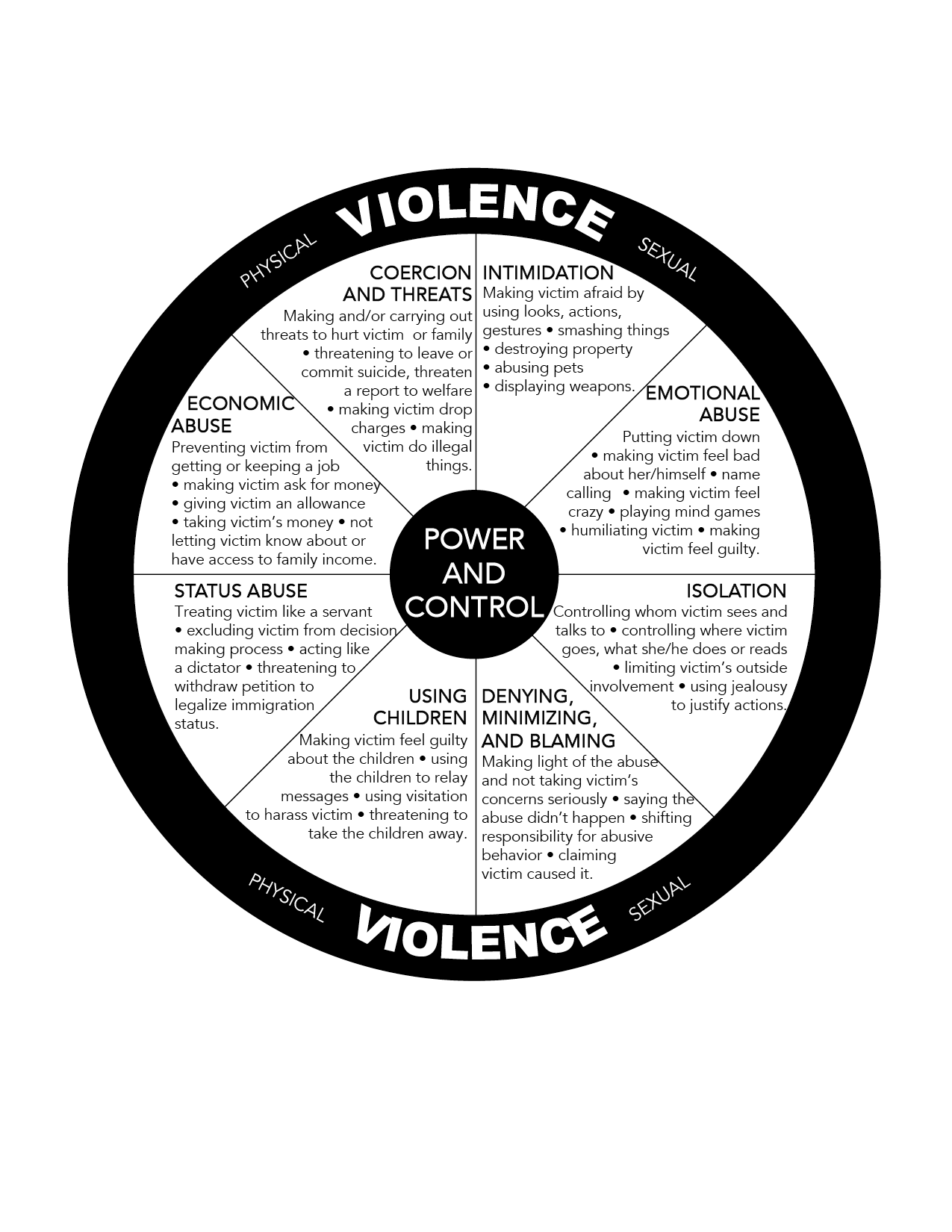
There is a an underlying theme of power and control that is present in abusive relationships where one partner is always trying to have power and control over the other person in the relationship. People causing harm may utilize coercion and threats, intimidation, emotional abuse, isolation, denying, minimizing, and blaming, using children, status abuse, economic abuse, as well as physical and sexual violence to maintain power and control. These behaviors are broken down in the power and control wheel.
Coercion and Threats in Controlling Relationships
Coercion and threats refers to frequently telling another person that if they do or don’t do something, then there will be consequences. While this can refer to threats to harm someone physically, it can also present in more subtle forms such as threatening to leave the relationship. Coercion and threats can have a powerful impact on controlling someone’s behavior.
Examples of Coercion and Threats:
- If you don’t do the dishes before I get home, then I won’t speak to you tonight
- If you don’t stop talking to him, then I’m going to leave you
- If you go out tonight, then I’m going to hurt myself
- If you don’t do what I want, then I’ll tell your parents that you’re gay
- If you leave the house without me, I’ll tell your employers that you’re an undocumented immigrant
Intimidation in Controlling Relationships:
This refers to your partner doing something that makes you feel afraid. This could be anything from a look in their eyes or a certain threatening stance they may take to punching a hole in the wall, throwing objects, or displaying weapons. When a person uses intimidation in their relationship, it’s designed to make the other person feel afraid. Their partner won’t feel safe to have their own opinions or engage in a constructive conversation.

Emotional Abuse in Controlling Relationships:
It might not be immediately apparent how emotional abuse relates to power and control. However, calling someone names, putting them down, making them feel worthless, or making them feel like they’re going crazy has longterm effects. It could destroy the victim’s self-worth and make them more likely to comply to their partner’s demands.
“If I’m told I’m stupid often enough, particularly by the person who is supposed to love me the most, I’m going to think it’s true,” says Mary Jane McCarthy, JBWS’ professional training manager. “It’s going to make me more vulnerable to the person trying to control me because I’m more likely to believe them.”
Examples of Emotional Abuse:
- Putting you down
- Making you feel bad about themselves
- Calling you names
- Making you feel crazy
- Playing mind games
- Humiliating you
- Making you feel guilty
Isolation in Controlling Relationships:
Controlling who the person experiencing abuse sees, where they are allowed to go, and what they are allowed to read, watch, or engage with are all methods of isolation. Isolation limits who is able to see what’s happening and prevents access to support for the person experiencing abuse. “If I’ve been isolated from my friends and family, who am I going to turn to when I need help?” says Mary Jane.
In addition to physical isolation, people experiencing abuse could endure a type of mental isolation as well. The person causing harm in the relationship can appear so charming and likable to outsiders that people might not believe what they are capable of at home. This makes it extremely difficult for the person experiencing abuse to talk about what’s happening and seek help.
Examples of Isolation:
- Controlling who you see and talk to
- Controlling where you go
- Controlling what you listen to, read, or watch
- Limiting your outside involvement
- Using jealousy to justify actions
Denying, Minimizing, and Blaming:
“If you just had dinner ready, I wouldn’t have gotten angry at you.” “If you kept the house neater, then I wouldn’t feel so stressed all the time.” These are examples of denying, minimizing, and blaming because it shifts all the responsibility from the person causing harm and places it onto the person experiencing the abuse.
“It’s saying ‘you’re making me do this,’ ‘the abuse isn’t as bad as you think,’ ‘some external factor is making me act this way,’ or ‘the abuse isn’t happening at all,'” says Mary Jane. “Denying, minimizing, and blaming, is saying ‘I don’t need to change, you need to change.'”
Examples of Denying, Minimizing, and Blaming:
- Making light of the abuse
- Not taking your concerns seriously
- Saying the abuse didn’t happen
- Shifting responsibility to you for abusive behavior
- Claiming you caused the abuse
 Using Children in Controlling Relationships:
People causing harm in their relationship might use children to control their partner because any threats to harm the children or take the children away will scare the person experiencing abuse. There are also subtle ways that children can be used in abusive relationships such as: asking the children to relay messages during visitation, telling the children negative things about the other parent, and encouraging them to start using power and control against the other parent as well.
“If I get the kids to believe that you’re bad, or you’re stupid, then I have more control over you,” explains Mary Jane.
Examples of Using Children
- Making you feel guilty about the children
- Using the children to relay messages
- Using visitation to harass you
- Threatening to take the children away
Status Abuse in Controlling Relationships:
Status abuse is when a person uses part of their identity to justify having power and control in the relationship. For instance: “I’m the man of the house, I should be in control,” “I make the money, you shouldn’t have a say in our finances,” “I’m more educated than you, I should be the one making the decisions,” “I’m a U.S. citizen and you’re an undocumented immigrant, I should be in control of our household,” and “I’m a law enforcement officer, no one is going to believe you.”
Examples of Status Abuse
- Treating you like a servant
- Excluding you from decision making process
- Acting like a dictator
- Threatening to withdraw petition to legalize your immigration status
Economic Abuse in Controlling Relationships:
Economic, or financial, abuse is present in 99% of abusive relationships. “If I’m the one who controls the finances, then I control everything,” says Mary Jane. “The person experiencing abuse can’t buy anything, they can’t go anywhere, they can’t do anything without me.” Financial abuse makes it extremely difficult for a person experiencing abuse to leave the relationship because their partner has ensured they are dependent on them for housing, groceries, childcare costs, and more.
Examples of Economic Abuse:
- Preventing you from getting or keeping a job
- Destroying your credit score
- Making you ask for money
- Giving you an allowance
- Taking your money
- Not letting you know about or have access to family income
Physical and Sexual Violence:
“If you think of all the sections of the power and control wheel as pieces of a pie, then the threat of physical or sexual harm is kind of like the pie pan,” explains Mary Jane. “It’s what is holding everything together and keeping the person experiencing abuse compliant.”

If you recognize any of these behaviors in your relationship, JBWS can help. Visit jbws.org/services