
Just two days before Liam Payne fell to his death in Argentina, his ex-fiancée, Maya Henry, went on The Internet Is Dead podcast to discuss the abusive relationship she allegedly had with Payne.
Throughout the hour-long episode, Henry spoke at length about her experiences with Payne recalling the fear, manipulation, and control she felt in her relationship. Henry explained that those feelings persisted even after the engagement ended.
The feelings were particularly intense before the release of her book Looking Forward, a fictionalized retelling of her relationship with Payne. Henry recalls being contacted by Payne’s friends asking her not to release the book because Payne wasn’t doing well. She recalled one friend insisting, “if something happens to him, you’re not only going to blame yourself but the whole world is going to blame you.”
Now that Payne has died, thousands of people are blaming Henry.
When a tragedy like this occurs, people will often ask victims: Why did you decide to share your story if you knew the other person was struggling with substance abuse or mental health problems? However, this question feeds into a broader cycle of power and control that makes victims feel responsible for the safety of their partners.
“When a victim feels like their actions are dependent on keeping someone else alive, then their entire being has to exist around that person,” explains Rachel Craig, an advocate at JBWS’ Safe House. “It is a very powerful method of control.”

While speaking on The Internet is Dead podcast, Henry mentioned that Payne “played with death” and would frequently say that he “wasn’t doing well” and “wouldn’t be around much longer.”
In abusive relationships, threats of suicide and self-harm make it difficult for victims to set boundaries, involve law enforcement, or publicly speak about the abuse that they have endured. If people are not familiar with the dynamics of abusive relationships, they may not understand why threats of death or self-harm could be so persuasive. They might wonder: If you’re being harmed by someone, why do you care what happens to them?
“Just because a victim might not want to be in a relationship with someone, does not mean they don’t want them to be alive,” says Craig. “We want the best for people as part of our shared humanity, even if we don’t want to date them.”
While self-harm and suicidal ideation can be a powerful method of control, it is imperative to take threats of all self-injurious behavior seriously. That is why we encourage victims of abuse to safety plan before leaving an abusive relationship. They can create a safety plan for their own security and plan around their partner spiraling into a mental health crisis or struggling with substance abuse.
If you live or work in Morris County, NJ call JBWS’ 24-Hour Helpline for more information about safety planning at 1.877.782.2873. If you don’t live in Morris County, call the National Domestic Violence Hotline at 800.799.SAFE (7233).
After Payne’s death, comments inundated The Internet Is Dead podcast, insisting that they remove the video of Maya Henry talking about her relationship with Liam Payne. Co-host Brittany Deitch replied to these comments by saying, “if we were to take down that video and erase it, then it would be to erase Maya’s story.”
“What happened is tragic and it’s okay to be sad about that but it’s also necessary to acknowledge that two things can exist at once,” says Craig. “You can grieve the memory of a person who meant a lot to you while still giving Maya the ability to share her story.”
It can be challenging to hear these types of accusations against a friend, family member, or other person you have held in such high regard. It can be difficult to process that a person you love may be capable of harmful actions.
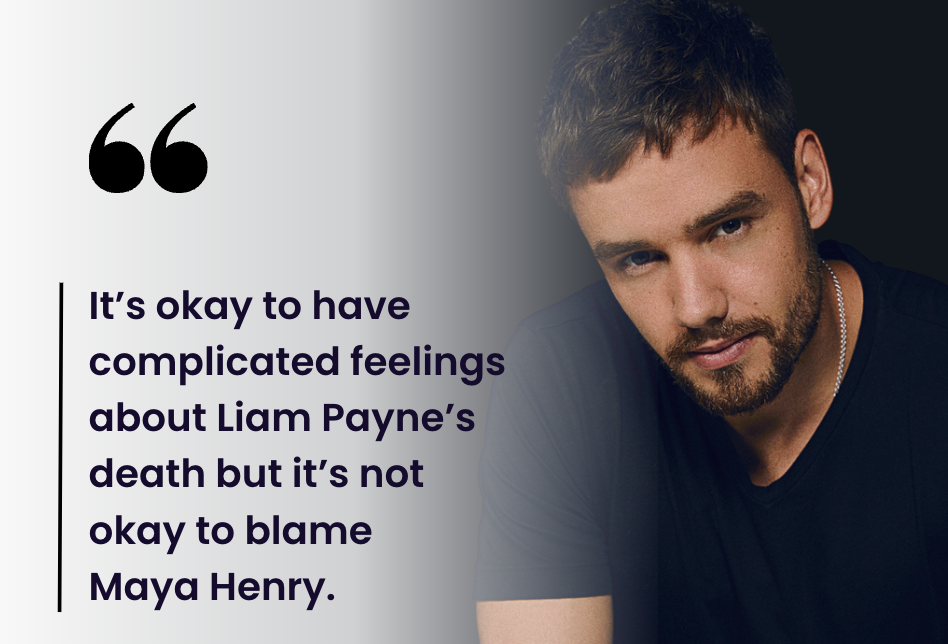
“Just because you had a positive interaction with them or they had a positive impact on your life doesn’t mean that is everyone’s story,” explains Craig. “Someone can be good to me and bad to someone else. It’s okay to have complicated feelings about these situations.”
Resources:
Suicide & Crisis Lifeline at 988.
Substance Abuse and Addiction Hotline: 1-844 289 0879