
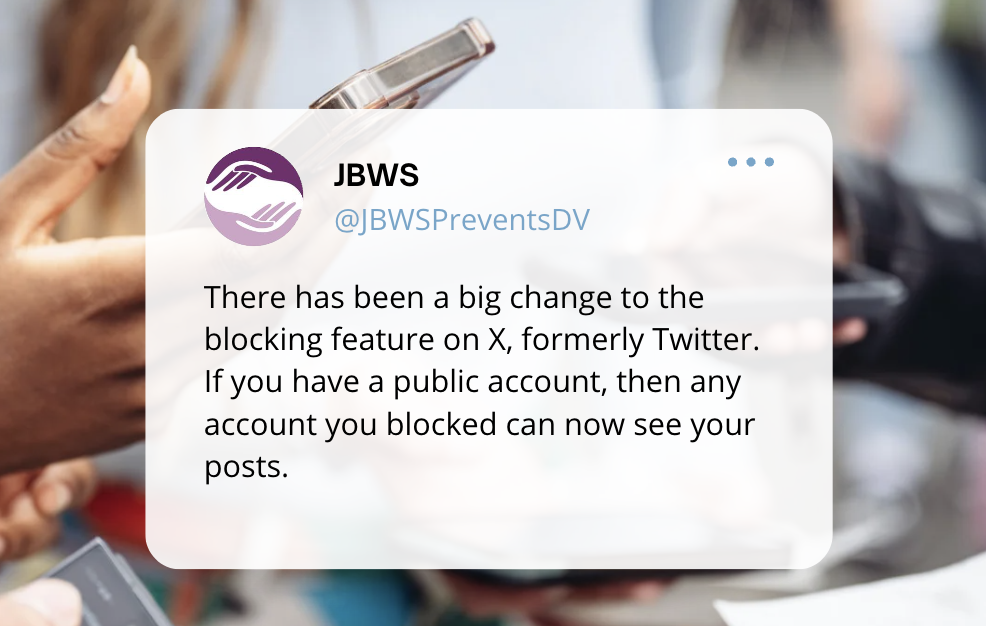
When you block an account on social media, it usually means that the blocked account can no longer see what you post. However, this is no longer the case on X, the social media platform formerly known as Twitter.
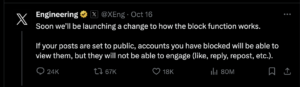
The company recently revealed major changes to the block function stating, “if your posts are set to public, accounts you have blocked will be able to view them, but they will not be able to engage (like, reply, repost, etc.)” This departure from the traditional blocking policy was done “for greater transparency.”
However, this change could put victims of domestic violence and stalking at risk.
Altering the block function allows people who have caused harm to easily access information about their victim. This could put a victim of abuse and stalking at risk if they’ve posted about their location, routine, or any other personal information. As one user noted, “many of us who have had stalkers or have been in a [domestic violence] relationship. We have to shut down our accounts.”
Many others shared this user’s sentiment posting:
- “This is awful, especially for women. For someone who doesn’t want an ex to know what they’re up to, now they can see, and stalkers can screenshot a tweet and use it to harass them/badmouth them.”
- “I’m not OK with this. When I block someone, it means I want no further interaction because they are toxic. Weakening the block function only benefits bullies.”
- “I have a whole restraining order against my ex because he’s crazy and scary. I shouldn’t have to make my account private just to have a small layer of protection from him.”
 While there have always been ways around the blocking feature on public accounts, this change makes it even easier to keep tabs on victims. It seems the only way to truly prevent a blocked account from seeing your content is by making your account private.
There are two types of posts you can make on X: public or protected. As defined by X:
- Public posts: (the default setting): Are visible to anyone, whether or not they have a X account.
- Protected posts: Only visible to your X followers. Please keep in mind, your followers may still capture images of your posts and share them.
However, as another X user pointed out, this change doesn’t feel fair. “I blocked my ex-boyfriend for a reason. My stalker having easy access to information about me isn’t ok and being forced to have to lock down my account as the only option sucks.”
If you are a victim of domestic violence or stalking and have an account on X, please look into your account status and the changes to the block function.
To learn more about the difference between public and protected (private) posts, click here. To learn more about blocking on X, click here. If you’re in an unhealthy relationship, JBWS can help. 24-Hour Helpline & Referral: 1.877.782.2873