

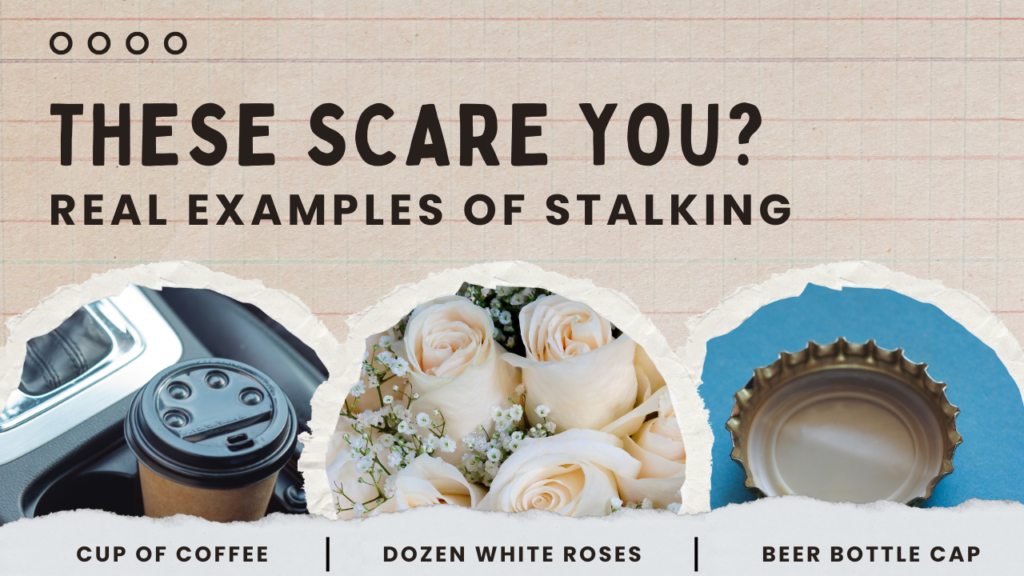
Would seeing a cup of coffee terrify you? What if it was made exactly how you like it from that new café you just found? What if you found the cup of coffee in your car, still warm, with a nickname you haven’t used in years scrawled on the side?
“It would be lovely if there was some anonymous person or robot who made my coffee every morning,” said Julia Holtemeyer of the Stalking Prevention Awareness and Resource Center (SPARC.) “But it is terrifying for a victim of stalking when you realize the context of the situation. It’s telling the victim that their stalker not only knows where they live but was recently there because the coffee was still warm.”
When you learn that the victim’s car was locked, that they had relocated and kept their address a secret, and that their old nickname was exclusively used by their former partner – it paints a different picture.
“It’s this whole elaborate, creative scenario meant to seem benign, even nice, friendly, or romantic to outsiders, whereas to the victim in that situation, it’s terrifying,” explains Holtemeyer. “And now the victim has to decide how they’re going to explain this to their friends, family, or the police.”
Learn more about this topic by streaming this episode of Unsilenced: Real Conversations About Abuse on Spotify below, YouTube, or find all other available platforms here.
Reporting Requires Vulnerability
To make the people around them understand the severity of the threat, the victim would have to disclose personal information about themselves. This typically requires a level of vulnerability that isn’t always comfortable for the victim.
Take this example of a bottle cap: when a victim got into her car to go to work, she found a Corona beer bottle cap on the driver’s seat. Finding this item terrified the victim but those around her questioned the validity of the threat. “It’s just a bottle cap. Is it that big of a deal?”, “How can you know someone put it there?”, “Did you just forget to lock your door?”
“In this real-life example, the victim had been sober for two years and their stalker knew they used to drink Corona,” explains Holtemeyer. “They put the bottle cap on the seat not only to say, ‘I’m watching you, I know where you live, and I can get to you at any time,’ but also as a very distinct, personal trigger.”
This puts the victim in a difficult position: to adequately explain this threat to the police, they would have to disclose their history with alcoholism. If they call the police and have to miss work, the victim wouldn’t be able to excuse their absence without disclosing personal information. They can’t simply say “I’m missing work today because I found a beer bottle cap in my car.”
“There are all of these professional and social costs that come with victims being vulnerable and explaining the context of the situation,” says Holtemeyer. “This is why context is crucial to understanding stalking.”
Context can transform a seemingly benign gesture, object, or experience into a clear threat. Learn more about stalking at StalkingAwareness.org.